
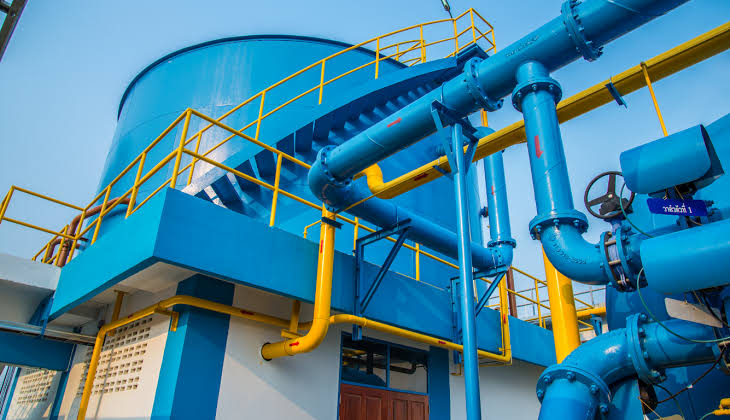
Zero Liquid Discharge, commonly known as ZLD, is an industrial water treatment approach designed to minimize or eliminate the discharge of liquid wastewater from a facility.
Instead of sending treated wastewater outside the plant as liquid effluent, a ZLD system treats and concentrates wastewater so that water can be recovered for reuse while the remaining dissolved solids are separated and managed as solid material.
ZLD is particularly useful for industries where water conservation, wastewater regulations or limited discharge options make conventional wastewater disposal challenging.
How Does a ZLD System Work?
A typical ZLD system combines several treatment stages. The exact configuration depends on wastewater quality, flow rate and the concentration of dissolved salts and contaminants.
A simplified ZLD process may include:
Pre-Treatment → Biological/Chemical Treatment → Membrane Treatment → Concentration → Evaporation → Crystallization → Water Recovery
The objective is to recover as much usable water as practical while concentrating the remaining contaminants into a manageable solid or concentrated stream.
Where Is ZLD Used?
ZLD can be considered in industries that generate high volumes of wastewater or wastewater containing significant dissolved solids.
Common applications include:
- Textile manufacturing
- Pharmaceutical industries
- Chemical industries
- Power generation
- Food processing
- Fertilizer manufacturing
- Mining
- Metal processing
- Refineries
- Other water-intensive industries
Key Benefits of ZLD
Water Recovery
One of the main objectives of ZLD is to recover treated water for reuse within the facility, reducing dependence on fresh water.
Reduced Liquid Waste Discharge
ZLD can significantly reduce or eliminate the need for conventional liquid wastewater discharge, depending on the system design and regulatory requirements.
Better Water Management
Recovered water can potentially be reused for cooling, washing, process operations or other suitable applications after meeting required quality standards.
Environmental Benefits
Reducing wastewater discharge can support improved environmental management and help facilities address water-related compliance requirements.
What Should Industries Consider Before Implementing ZLD?
ZLD can be an advanced and energy-intensive treatment approach, so it should be evaluated carefully before implementation.
Important considerations include:
Wastewater Characteristics:
The chemical composition, TDS, COD, hardness, contaminants and scaling potential can affect system design.
Water Recovery Requirement:
The required recovery percentage influences equipment selection and operating costs.
Energy Availability:
Evaporation and crystallization can require substantial energy, making energy integration and heat recovery important.
Operating Costs:
Chemical consumption, membrane replacement, energy requirements and maintenance should be considered.
Final Solid Management:
The salts and solids produced by ZLD require appropriate handling, recovery or disposal.
Space and Infrastructure:
The treatment system should be designed according to available space and existing plant infrastructure.
Conclusion
Zero Liquid Discharge can be an effective approach for industries seeking higher water recovery and reduced liquid wastewater discharge. However, ZLD is not a one-size-fits-all solution.
A detailed assessment of wastewater characteristics, water reuse requirements, energy availability, operating costs and solid waste management is essential before selecting a ZLD system.
With the right design and process integration, ZLD can become an important part of a comprehensive industrial water management strategy.
