
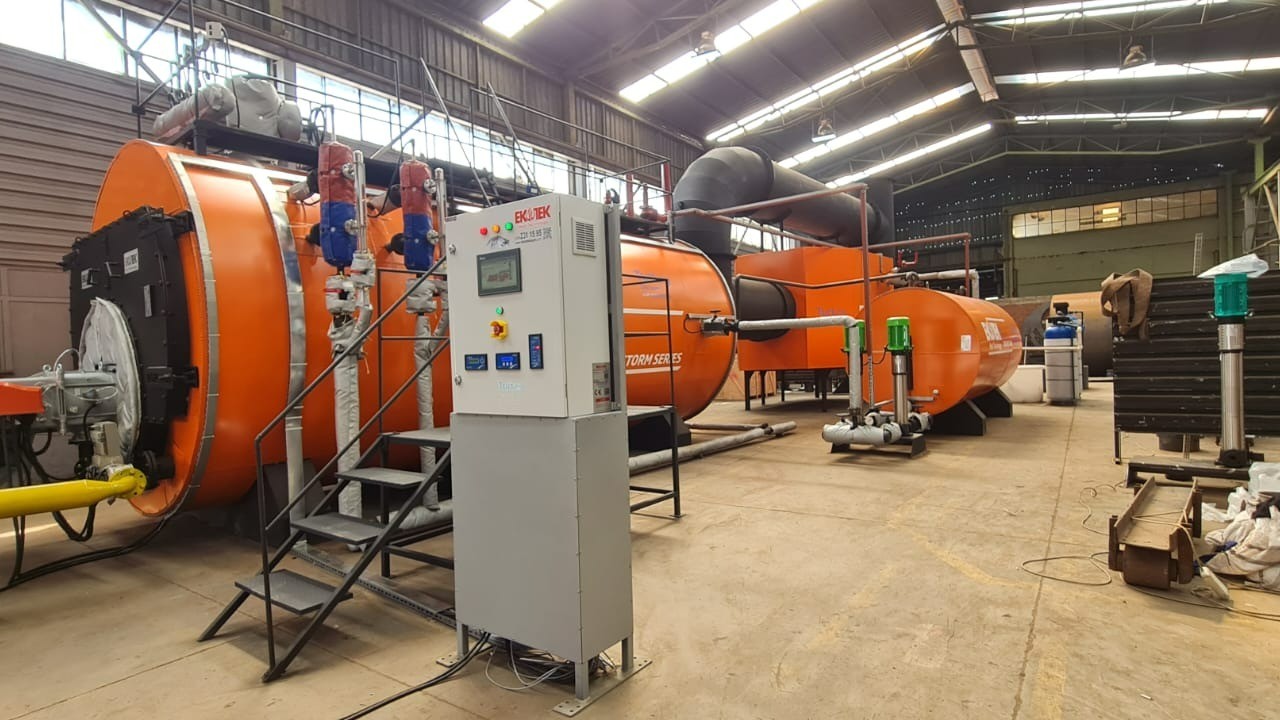
Industrial boilers are major energy consumers in many manufacturing facilities. Steam generated by boilers is used for heating, processing, drying, sterilization and other industrial applications. Even small improvements in boiler efficiency can result in significant fuel savings over time.
Reducing boiler fuel consumption requires more than simply lowering the fuel supply. It involves improving combustion, maintaining equipment, controlling operating conditions and continuously measuring performance.
What Determines Boiler Fuel Efficiency?
Boiler efficiency depends on how effectively the system converts the energy contained in fuel into useful steam or heat.
Several factors influence efficiency, including:
- Combustion efficiency
- Fuel quality
- Excess air levels
- Boiler load
- Steam pressure
- Feedwater temperature
- Heat losses
- Blowdown rate
- Insulation quality
- Equipment maintenance
1. Improve Combustion Efficiency
Efficient combustion ensures that fuel burns properly and releases maximum usable energy.
Too little air can result in incomplete combustion, while excessive air can carry significant heat away through the flue gas. Maintaining the correct air-to-fuel ratio is therefore essential.
Regular monitoring of combustion parameters can help identify inefficiencies and optimize burner operation.
2. Maintain Fuel Quality
Fuel quality directly affects boiler performance. Variations in fuel composition, moisture, calorific value or contaminants can influence combustion and overall efficiency.
Industries should monitor fuel quality and ensure that the fuel supply system is properly maintained.
3. Optimize Operating Conditions
Operating a boiler significantly below or above its optimal load can reduce efficiency.
Proper load management helps the boiler operate closer to its efficient operating range. Where appropriate, industries can also use automation and control systems to match steam generation with actual demand.
4. Reduce Heat Losses
Heat can be lost through:
- Flue gases
- Boiler surfaces
- Steam leaks
- Poor insulation
- Blowdown
- Unused steam
Proper insulation, regular maintenance and leak detection can reduce avoidable energy losses.
5. Improve Feedwater Management
Increasing the temperature of boiler feedwater can reduce the amount of energy required to generate steam.
Economizers and heat recovery systems can capture heat from exhaust gases and transfer it to incoming feedwater, improving overall system efficiency.
6. Monitor Boiler Performance
You cannot effectively improve what you do not measure.
Important parameters to monitor include:
- Fuel consumption
- Steam generation
- Flue gas temperature
- Oxygen levels
- Steam pressure
- Feedwater temperature
- Blowdown rate
- Boiler efficiency
Regular performance monitoring helps identify changes and provides data for corrective action.
Conclusion
Reducing industrial boiler fuel consumption requires a combination of efficient combustion, good fuel management, optimized operating conditions, heat recovery and preventive maintenance.
A systematic approach to monitoring and improving boiler performance can reduce energy consumption while maintaining reliable steam production.
